
How to Eat Healthy on a Budget in 2026
Eat healthy on a budget in 2026 with affordable staples, a flexible meal plan, unit-price comparisons and practical ways to reduce food waste.
The short answer
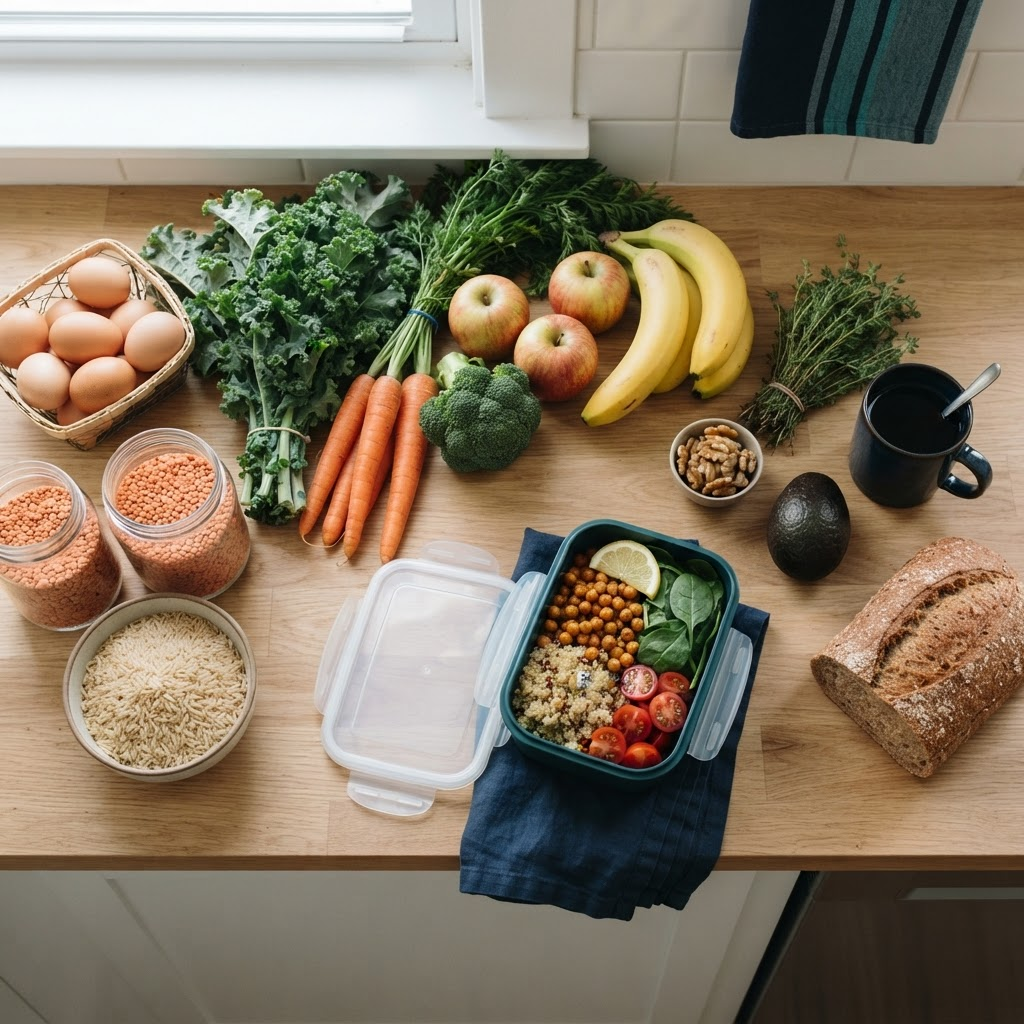
To eat healthy on a budget, plan five or six flexible meals around affordable staples, beans, lentils or eggs, and a mix of seasonal, frozen and canned produce. Check your pantry before shopping, compare unit prices and buy quantities you will actually eat.
Reuse ingredients across meals and store leftovers safely to reduce waste. Use the Price Comparison Calculator to compare equal quantities; a larger package is good value only if you can use it.
The budget formula that works
Before shopping, split the week's food into four groups:
- Low-cost staples: rice, oats, pasta, bread, potatoes
- Affordable protein: beans, lentils, eggs, canned fish, tofu, yoghurt, chicken thighs
- Fruit and vegetables: seasonal fresh produce plus frozen and canned options
- Flavour builders: onions, garlic, herbs, spices, tomato paste, sauces and stock
Choose ingredients that can appear in several meals. A bag of rice might become a stir-fry, a grain bowl and a side dish. Roast vegetables can become dinner, lunch and soup.
USDA MyPlate recommends planning meals before shopping, using a list and preparing healthy meals that fit the budget. The NHS and Australian dietary guidance also emphasize variety across food groups rather than one expensive “superfood.”
Build a realistic weekly meal plan
Start with your schedule, not an idealized menu. If Tuesday is busy, plan leftovers or a quick meal instead of a recipe that takes an hour.
A simple week could include:
- Oats, fruit and yoghurt for breakfast
- Eggs or beans on toast for a quick meal
- Lentil and tomato pasta
- Chicken, tofu or bean stir-fry with rice and frozen vegetables
- Baked potatoes with tuna, beans or yoghurt
- Vegetable soup with bread
- One flexible “use what is left” dinner
Plan only five or six dinners. Leave space for leftovers, a social meal or a change of plan. Buying ingredients for seven completely different recipes often creates waste.
What should a healthy budget plate include?
There is no single perfect plate for everyone, and individual needs differ. As a practical guide, build meals around a variety of vegetables or fruit, a source of protein and a filling grain or starchy food.
Affordable examples include:
- Rice, black beans, frozen corn and salsa
- Lentil curry with potatoes and frozen spinach
- Omelette with vegetables and wholegrain toast
- Pasta with canned tomatoes, chickpeas and vegetables
- Yoghurt, oats, banana and peanut butter
- Chicken thigh tray bake with potatoes and carrots
If you have allergies, a medical condition, are pregnant, or need a therapeutic diet, seek advice from a qualified health professional rather than following a general budget plan.
Compare unit prices, not package prices
A larger package is not automatically cheaper. Check the price per 100g, pound, kilogram, ounce or litre on the shelf label.
Compare the edible amount too. A cheaper product is poor value if much of it is discarded. Frozen vegetables can be especially useful because you can cook only what you need.
Store brands often cost less than branded staples with similar basic ingredients. Compare nutrition labels where relevant, particularly sodium, added sugar and saturated fat.
Fresh, frozen or canned?
All three formats can fit a healthy budget.
Fresh produce is valuable when it is seasonal, discounted and likely to be eaten quickly.
Frozen fruit and vegetables last longer and are useful for smoothies, soups and stir-fries. They can reduce waste because there is no pressure to use the whole package immediately.
Canned foods such as tomatoes, beans and fish are convenient and shelf-stable. Compare labels, and choose lower-sodium or no-added-salt options when practical. Draining and rinsing canned beans can also remove some of the sodium.
Do not pay extra for fresh food that will spoil before you use it.
Low-cost proteins that stretch a meal
Meat is often one of the largest items on a grocery bill. You do not have to remove it completely to save money.
Try:
- Replacing part of the meat in chilli or pasta sauce with lentils
- Using eggs for one or two meals
- Adding beans or chickpeas to salads and grain bowls
- Choosing chicken thighs instead of breast when cheaper
- Buying canned fish when fresh fish is outside the budget
- Using tofu where it is competitively priced
- Serving a smaller amount of meat with more vegetables and grains
Compare Grocery Unit Prices
e.g. g, kg, ml, L, oz, or item.
Result
- Option BBest
- $0.008 / g
- Option A
- $0.009 / g
Option B is the best value at $0.008 per g. The largest pack is not always the cheapest per unit — always check the unit price before assuming bigger means better.
Compare cost per serving rather than price per package. A bag of dry lentils may make many portions, while a small premium snack may disappear in one sitting.
A sample low-waste shopping list
Adjust quantities for household size and local prices:
- Oats
- Rice or another grain
- Pasta
- Potatoes
- Wholegrain bread
- Eggs
- Beans or lentils
- Yoghurt
- One meat, fish or tofu option
- Frozen mixed vegetables
- Seasonal fruit
- Onions and carrots
- Canned tomatoes
- Milk or an alternative
- A small number of sauces, herbs or spices
Check the pantry, freezer and fridge before buying. Photographing them can prevent duplicate purchases.
How to reduce food waste
Food waste is money already spent. Use the most perishable items first and freeze extra portions before they are forgotten.
Create one weekly “clear the fridge” meal. Soups, omelettes, stir-fries, pasta and grain bowls are good formats for small amounts of vegetables and cooked protein.
Label leftovers with the date. Follow local food-safety guidance for cooling, storing and reheating food; if you are unsure whether food is safe, do not rely only on smell or appearance.
When convenience food may be worth it
The cheapest ingredient is not always the best value if you have no time or energy to prepare it. Pre-cut frozen vegetables, canned beans and microwaveable whole grains may cost more per unit but still be cheaper than takeaway food.
Choose convenience strategically. Pay for the shortcut that helps you cook, not for individually packaged “health” branding that adds little value.
What we would skip
- Expensive powders or supplements without a specific need
- Premium “superfoods” when ordinary alternatives provide similar everyday value
- Large bulk purchases that your household cannot finish
- Seven unrelated recipes with unique ingredients
- Shopping while hungry without a list
- Assuming every sale item is a saving
Bottom line
Healthy eating on a budget is mostly a planning and waste problem, not a search for miracle foods. Build meals from flexible staples, affordable protein and a mix of fresh, frozen and canned produce. Compare unit prices and cook enough for another meal.
Start by changing one week, not your entire diet. A repeatable shopping list and five dependable meals can save more money than chasing every discount.
A practical unit-price and waste check
Compare the shelf price per 100g, kilogram, ounce or comparable serving, using the same unit for both products. For illustration only, a 500g bag costing $2.50 works out to $5 per kg; a 1kg bag at $4 is cheaper per kilogram, but buying the larger bag wastes money if half spoils. If only 500g of the larger bag is eaten, its effective cost is $8 per kilogram eaten. Use local shelf labels and prices, not these example prices, before choosing.
Build a five-meal plan around overlapping ingredients: cook a batch of rice and lentils, use some with vegetables, another portion in soup, and reserve a portion safely for later. Check the use-by date and food safety guidance before storing leftovers. Compare the cost per portion of your actual basket, including ingredients left unused. The meal kit versus groceries comparison shows when convenience can outweigh a lower grocery receipt; the Price Comparison Calculator helps compare equal quantities.
Common questions
Is frozen produce less healthy than fresh?
Frozen produce can be a practical, nutritious option and often reduces waste. Choose products without unnecessary sauces, salt or added sugar when possible.
Are store brands worth buying?
Often, yes. Compare ingredients, nutrition information and unit prices. The cheapest package is not always the cheapest per serving.
How can I eat more protein cheaply?
Beans, lentils, eggs, canned fish, tofu and yoghurt are common lower-cost options. Prices vary by country and retailer, so compare cost per serving.
Can meal planning really save money?
It can reduce duplicate purchases, impulse buying and food waste. The savings depend on current habits, household size and local prices.