
Googlebook Starts at $899: Is Google’s New AI Laptop Worth It vs MacBook Air?
Googlebook preorders are open from $899. Here’s how Google’s Gemini-first laptops compare with the MacBook Air on price, apps, battery life and long-term value.
Quick answer
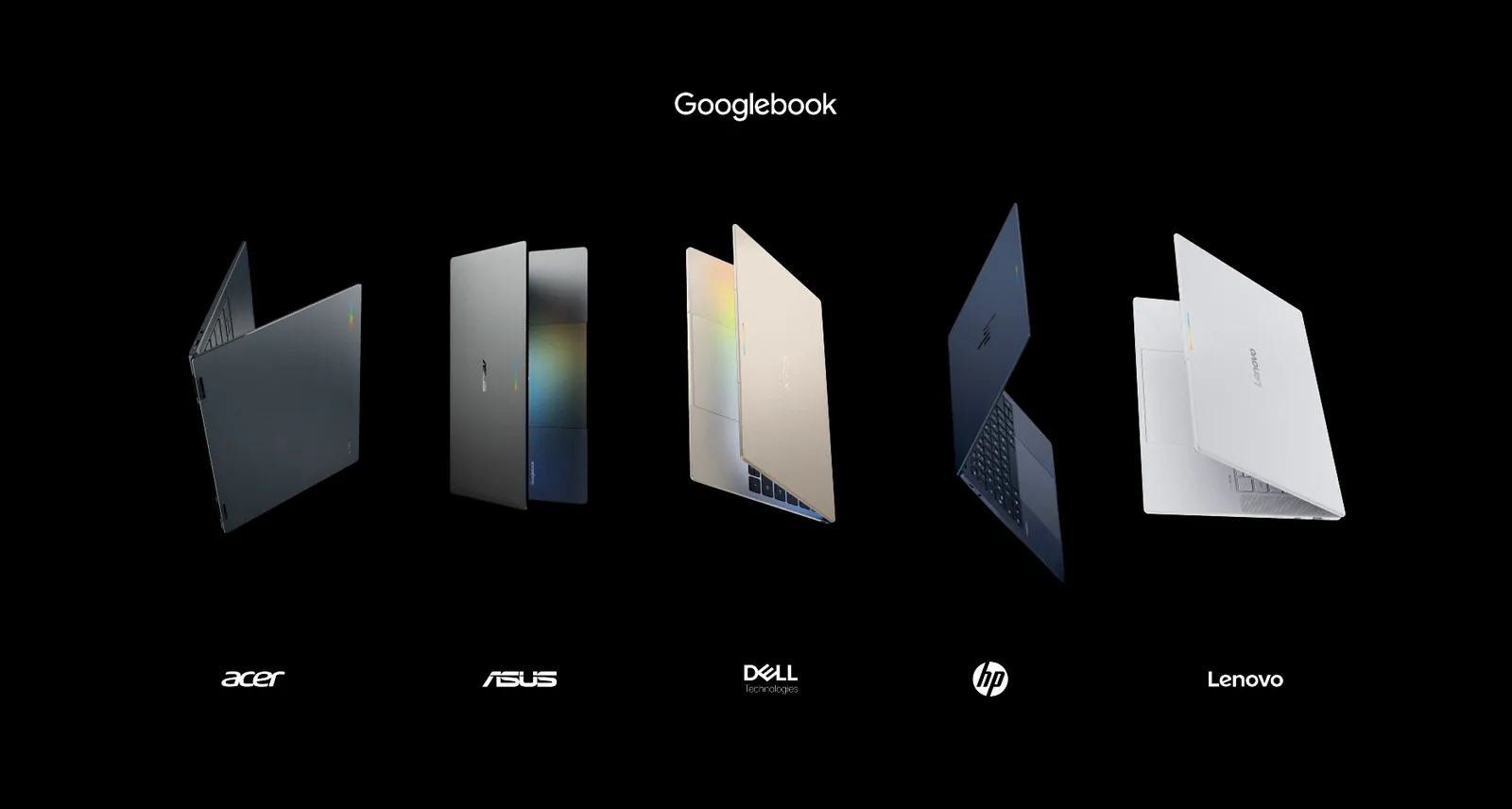
Googlebook is worth considering if you use an Android phone, rely heavily on Google services and want Gemini woven into everyday laptop tasks. The first five models start at US$899 and include 12 months of Google AI Pro, with U.S. store availability beginning October 4 and Canada, the U.K. and Australia following October 5.
For most iPhone owners, creative professionals who depend on specific macOS software, or buyers who value a proven laptop platform, the MacBook Air remains the safer choice. The most important catch is that “Googlebook” is a platform rather than one identical laptop: Acer, Asus, Dell, HP and Lenovo each offer different hardware, so the best model depends on screen size, ports, weight and processor.
Best for Android users: Googlebook Best for iPhone users and established creative workflows: MacBook Air Cheapest launch option: Acer Googlebook 14 at US$899 Best reason to wait: independent reviews and retailer discounts may reveal which first-generation model delivers the strongest value
Googlebook price and release date
Google opened preorders on September 21, 2026. The first devices reach stores on October 4 in the United States and October 5 in Canada, the United Kingdom and Australia.
| Market | Preorders | In-store availability | Confirmed starting point | |---|---:|---:|---:| | United States | Open now | October 4 | US$899 | | Canada | Open now at participating retailers | October 5 | Check local retailer listing | | United Kingdom | Open now at participating retailers | October 5 | Check local retailer listing | | Australia | Open now at participating retailers | October 5 | From A$2,299 |
Google’s official launch information confirms five initial manufacturers: Acer, Asus, Dell, HP and Lenovo. U.S. starting prices span US$899 to US$1,299. Local prices and exact configurations vary, so compare the processor, RAM, storage and warranty rather than converting the U.S. price directly.
Every Googlebook includes 12 months of Google AI Pro with 5TB of cloud storage and Gemini Advanced tools. Google also lists three-month trials of YouTube Premium, Adobe Photoshop and other services. Those extras add value only if you would have paid for them anyway, so they should not be treated as a cash discount.
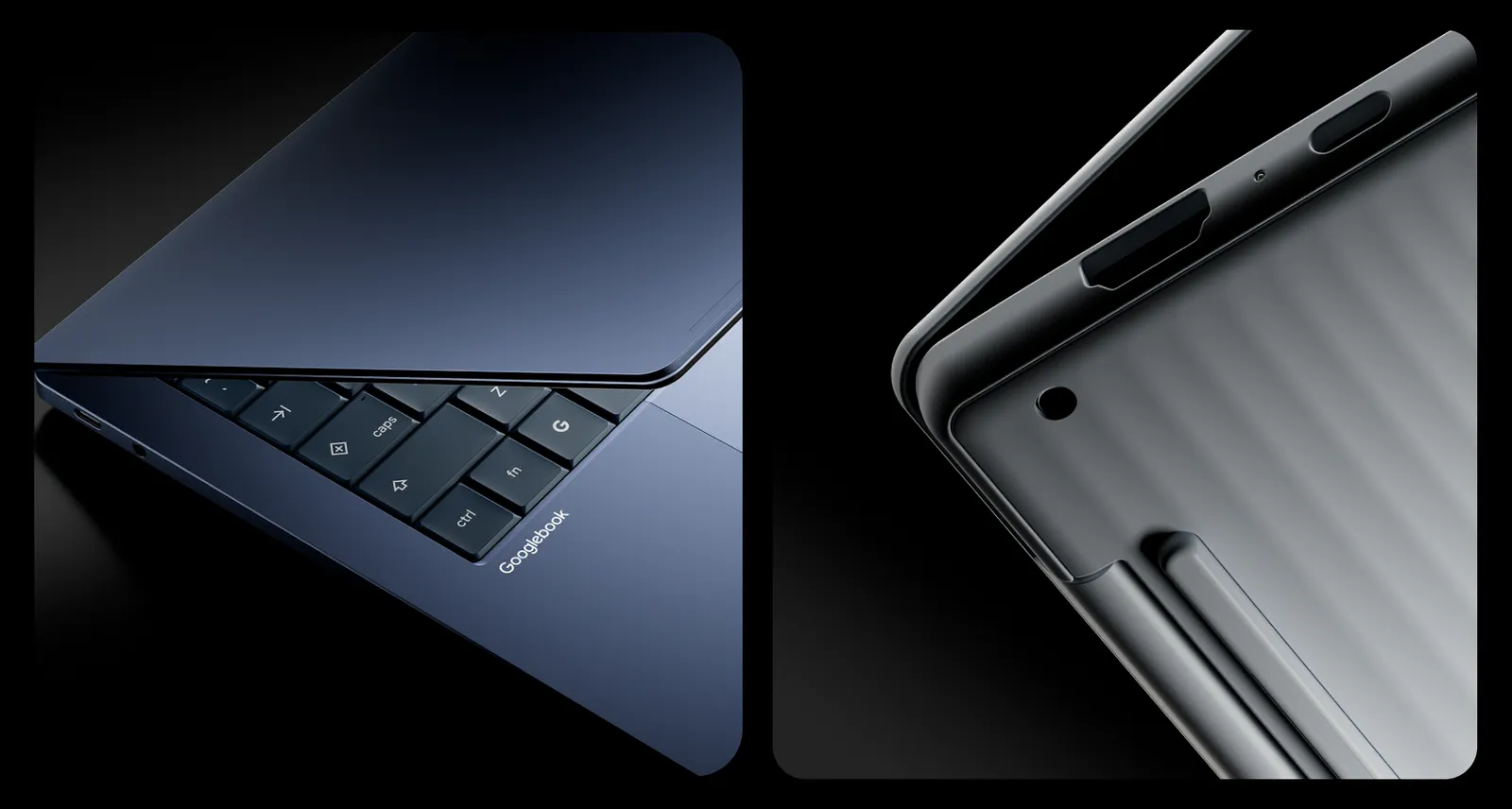
*The first Googlebook range includes five premium designs. Source: Google.*
What is a Googlebook?
Googlebook is Google’s new premium laptop category. It combines Android technology with desktop foundations from ChromeOS, giving users a full Chrome browser, Android apps, Linux tools and deeper connections to Android phones.
This is not simply a renamed budget Chromebook. Googlebook hardware starts with at least 16GB of RAM, premium materials, touchscreens and modern Intel Core Ultra or Qualcomm Snapdragon processors. Google says models can offer up to 14 hours of video playback or 16 hours of web browsing, although real battery life will vary.
The software is built around Gemini. Key features include:
- Magic Pointer: select on-screen content and ask Gemini to explain, compare or act on it.
- Rambler: turn natural speech into cleaner, formatted text.
- Smart file search: search files and photos by what they contain, not only by filename.
- Gemini Live: talk with Gemini while sharing what is on your screen.
- Custom widgets: create personalized tools by describing what you need.
- Android continuity: cast phone apps, continue tasks and access phone files from the laptop.
The promise is straightforward: make an Android phone and laptop feel like parts of one system, much as Apple links an iPhone and Mac.
Googlebook vs MacBook Air: the important differences
| Feature | Googlebook | MacBook Air | |---|---|---| | Starting price | From US$899 | From US$1,299 for the current M5 Air | | Operating system | Googlebook OS, combining Android and ChromeOS foundations | macOS | | Phone integration | Best with Android | Best with iPhone | | AI focus | Gemini built deeply into the system | Apple Intelligence and third-party AI apps | | Apps | Web, Android and Linux apps | Mature macOS desktop app library | | Hardware choice | Five launch brands and multiple form factors | Apple-controlled 13- and 15-inch models | | Touchscreen | Available across Googlebook models | No touchscreen | | Updates | Google promises up to 10 years | Apple does not publish one fixed support term | | Included cloud/AI plan | 12 months of Google AI Pro and 5TB | No equivalent year-long AI/cloud bundle |
The starting-price comparison needs context. Googlebook’s US$899 entry price is US$400 below the current M5 MacBook Air’s listed US$1,299 starting price, but Apple also sells the lower-priced MacBook Neo and retailers may discount older Air models. A discounted previous-generation MacBook Air can therefore compete directly with the least expensive Googlebook.
Googlebook offers more hardware variety. Acer’s entry model is a convertible 2-in-1, Asus emphasizes low weight, Lenovo offers a larger 15-inch display, and Dell and HP target premium clamshell buyers. MacBook Air is less flexible but more consistent: one company controls the hardware, software and support experience.
Is Gemini integration actually useful?
Gemini is Googlebook’s clearest advantage, but its value depends on your routine.
It could save time if you regularly summarize long documents, compare information on screen, clean up dictated notes, search a large collection of files or move work between an Android phone and laptop. The Magic Pointer is particularly practical because it brings assistance to the content already on screen rather than forcing you to copy and paste into a separate chatbot.
However, AI features should not outweigh basic laptop buying questions. Check whether the keyboard feels comfortable, the display is bright enough, the ports match your accessories and your essential apps run properly. AI subscriptions can also become an ongoing cost after the included period ends.
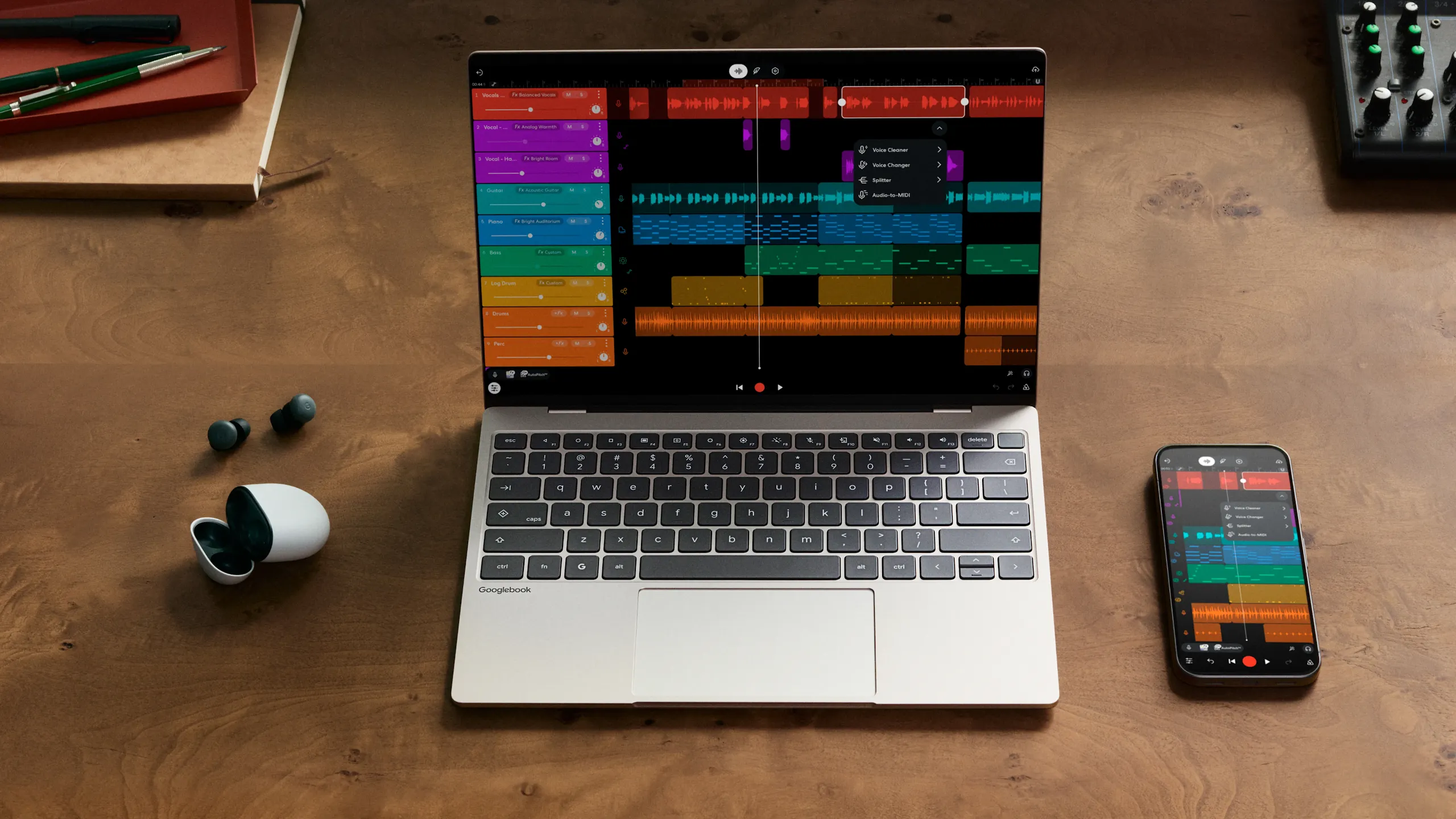
*Googlebook is designed to hand off apps and files from an Android phone. Source: Google.*
Which Googlebook should you buy?
The five launch models serve different buyers.
Acer Googlebook 14: best value and flexibility
The Acer model starts at US$899 and is the only convertible in the opening lineup. Its screen can fold into tablet mode, making it useful for reading, sketching and travel. This is the obvious first option for price-sensitive buyers, but confirm storage and processor specifications before ordering.
Asus Googlebook: best for frequent travelers
Asus’ model weighs about 2.2 pounds and includes a wider selection of ports than some thin competitors. It is attractive if portability matters more than a large screen.
Dell XPS Googlebook: best minimalist premium design
Dell brings its XPS styling to Googlebook. It may appeal to buyers who want a compact, polished machine, although limited ports can mean carrying adapters.
HP Googlebook: best for premium security and storage options
HP offers facial and fingerprint authentication and configurations with more storage. It suits professionals who want premium hardware and stronger sign-in flexibility.
Lenovo Googlebook: best for a larger screen
Lenovo’s 15.3-inch model gives productivity users more space for documents and multitasking. The trade-off is a larger device and a higher starting price.
Who should choose Googlebook?
Googlebook makes the most sense if you:
- own an Android phone and want tight phone-to-laptop continuity;
- use Gmail, Google Drive, Docs and Gemini every day;
- want a touchscreen or convertible design;
- value a choice of brands, sizes and processors;
- can confirm that all essential work or school apps are available.
The MacBook Air is likely the better fit if you:
- use an iPhone, AirPods and other Apple devices;
- need professional macOS applications or established creative workflows;
- prefer a mature platform with a large accessory ecosystem;
- care more about proven battery performance and resale value than built-in AI;
- do not want first-generation platform risks.
Pros and cons
Googlebook advantages
- Lower US$899 entry price than the current MacBook Air
- Deep Android phone integration
- Gemini tools built into the operating system
- Touchscreens and a convertible option
- Five hardware makers and multiple designs
- 12 months of Google AI Pro included
- Up to 10 years of promised updates
Googlebook drawbacks
- First-generation platform with limited long-term evidence
- App quality may vary between Android, web and Linux versions
- Entry price is high compared with ordinary Chromebooks
- Hardware quality and value differ by manufacturer
- Some AI value is tied to a subscription after the included year
- Mac and Windows users may face workflow or file-compatibility friction
Buy now or wait?
Preordering makes sense only if you already know which model and configuration fits your needs, and the retailer offers an easy return policy.
Most buyers should wait for independent reviews. Battery claims, heat, sleep reliability, app compatibility and everyday performance matter more than launch demonstrations. Waiting also gives retailers time to introduce bundles or discounts before the holiday shopping season.
If you need a laptop today and use an iPhone, the MacBook Air remains the predictable choice. If you use Android and your current laptop still works, waiting until October gives you time to compare all five Googlebooks with real-world tests.
Bottom line: is Googlebook worth it?
Googlebook is not automatically a better deal than MacBook Air simply because it starts at US$899. Its real advantage is the combination of Android continuity, touchscreen hardware choices and Gemini tools.
For committed Android and Google-service users, the Acer model at US$899 could be the most compelling entry point. For buyers who need established desktop software, consistent performance and an iPhone-centered ecosystem, MacBook Air is still the safer investment.
The smartest move for most people is to shortlist the Googlebook model that matches their needs, verify app compatibility, and wait for reviews before the October 4–5 retail launch.