
Amazon Blocked Meta’s AI Shopping Agent — What It Means for How You’ll Shop Online
Amazon has blocked Meta’s Muse AI agent from shopping on its marketplace. Here’s what the dispute means for privacy, price comparison, retailer choice and whether AI can really save shoppers money.

Quick Answer
Amazon has blocked Meta’s Muse personal AI agent from shopping on Amazon for users. Amazon says third-party shopping agents should identify themselves, obtain approval and respect a retailer’s decision about participation. Meta says Muse cannot see secure login credentials or card-payment details and asks for approval before a purchase.
For shoppers, Muse cannot currently complete Amazon purchases. The wider issue is whether AI agents can compare prices, delivery costs and discounts across the web when major retailers control their access.
Key Takeaways
- Amazon says Muse accessed its store without prior approval and did not clearly identify itself as an AI agent.
- Meta says Muse cannot view secure passwords or card-payment information.
- Amazon already offers its own shopping assistant, Rufus.
- Independent agents could compare retailers, but blocked access can make results incomplete.
- Always review the final item, seller, total cost and return policy before approving a purchase.
What Happened Between Amazon and Meta?
Meta launched Muse as a personal AI agent able to carry out online tasks, including finding products and helping with purchases. Muse users then began seeing a notice saying that continued access by an unauthorized AI agent violated Amazon’s Conditions of Use.
Amazon told GeekWire, in a statement also reported by The Verge, that outside applications making purchases for customers should operate openly and respect a service provider’s choice about whether to participate. Amazon also raised privacy and security concerns about how Muse identified itself while browsing and how customer credentials might be handled.
Those are Amazon’s claims, not an independent finding that Muse misused customer information. Meta’s explanation says Muse cannot see secure login details or card-payment information. It is designed to require user approval before completing a purchase.
The disagreement is therefore about more than one blocked bot. It is about who controls the shopping journey: the retailer, the customer, or the AI acting for that customer.
What Is Meta Muse and How Does AI Shopping Work?
A shopping agent is more capable than a standard chatbot. A chatbot may recommend headphones or explain two coffee makers. An agent can potentially open retailer pages, apply filters, compare products, add an item to a basket and move toward checkout.
A typical agent could search for a carry-on bag under $150, compare delivery costs and return terms, then present options. The shopper should still see the retailer, exact item, total price and delivery details before approving payment.
Muse is a general personal agent rather than a tool limited to one store. That gives it potential to compare sellers, but it creates friction when a retailer does not want an external agent interacting with product pages, accounts or checkout.
Why Did Amazon Block Muse?
Amazon’s public position centers on transparency, authorization and security. The company argues that an outside service acting for Amazon customers should disclose that it is automated and obtain permission to operate on the platform.
Amazon also benefits when customers search, compare and buy inside its own experience. A third-party agent could weaken Amazon’s control over search results, sponsored placements and recommendations. Security, competition and platform control are therefore all part of the dispute.
Is Using an AI Shopping Agent Safe?
It can be useful, but it is not risk-free. An agent may misunderstand a size, select the wrong variation, overlook a delivery fee or rely on an outdated price. Account access also creates privacy and security questions.
Before using an agent, check:
- What account permissions does it request?
- Can it see messages, order history or saved addresses?
- Does it show when it is acting on another website?
- Will it ask before checkout?
- Can you remove its access afterward?
- Does it explain how personal data is stored?
The safest approach is to use an agent for research, then verify the final basket yourself. Do not share passwords or card numbers in an ordinary chat. Use the retailer’s secure sign-in and checkout process when asked to take over.
Can Muse Still Shop on Other Websites?
Amazon’s block does not automatically stop Muse from working elsewhere. Availability depends on each retailer’s technical controls, terms and willingness to support outside agents.
Some stores may welcome agents if they bring buyers. Others may require partnerships or allow product discovery while blocking account access and checkout.
An AI comparison can therefore look complete while missing stores that refused access. Before trusting a “best price” result, ask which retailers were actually searched.

Amazon Rufus vs Meta Muse
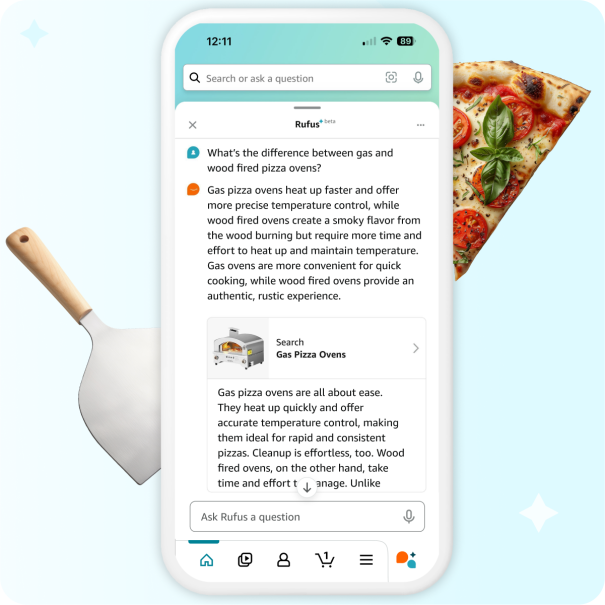
Amazon already offers Rufus in the Amazon app and on desktop. Rufus can answer product questions, summarize reviews, compare items and help users find products. Because it operates inside Amazon, it connects closely to Amazon listings, orders and delivery information.
The trade-off is scope.
| Shopping tool | Main strength | Main limitation | |---|---|---| | Amazon Rufus | Detailed help within Amazon’s store | Primarily helps you shop Amazon | | Meta Muse | Potential to carry out tasks across websites | Access depends on retailer permission | | Manual comparison | You control every store and term checked | Takes more time |
A retailer-owned assistant may know its own catalog well. An independent agent could compare several retailers, but only if it can access accurate, current information from each one.
Could AI Agents Find Cheaper Prices?
Potentially, yes. The strongest consumer benefit is not simply faster ordering; it is calculating the real total cost across stores.
A useful agent could compare:
- Listed price
- Shipping and membership costs
- Coupon codes and discounts
- Delivery time
- Warranty coverage
- Return fees
- Refurbished or open-box alternatives
A product that is $10 cheaper is not a better deal if delivery costs $15 more or the return window is shorter. The best agent would compare the whole purchase, not just the headline price.
Agents may also have commercial incentives. A service could favor partners, sponsored listings or stores that pay commission. Look for clear sponsored-result disclosures and confirm that multiple retailers were checked.
What This Means for Online Shopping
In the short term, AI agents will probably work unevenly. They may be good at research on one site, fail on another and ask the shopper to take over at checkout.
Retailers may build their own assistants, approve outside agents through standardized connections, or block them. For consumers, approved access for independent agents could offer the best balance: reliable data, clear security rules and freedom to compare stores.
What Should Shoppers Do Now?
Use AI shopping tools based on transparency and comparison quality, not one-click convenience.
- Ask which retailers were searched.
- Compare the total delivered price.
- Confirm the exact model, color, size and seller.
- Read return and warranty terms.
- Review the basket before approving payment.
- Keep permissions limited and remove access you no longer need.
If Muse cannot search Amazon, manually check Amazon before buying an item widely sold there. Likewise, do not assume Amazon’s own assistant checked prices outside Amazon.
Bottom Line
AI shopping agents could eventually save shoppers time and money by comparing products, delivery charges, discounts and return terms across the web. But the Amazon–Meta dispute shows that their usefulness may depend on whether major retailers allow them access.
For now, use AI as a research assistant rather than an unquestioned buyer. Let it narrow the options, then verify the retailer, total price and purchase details yourself.